

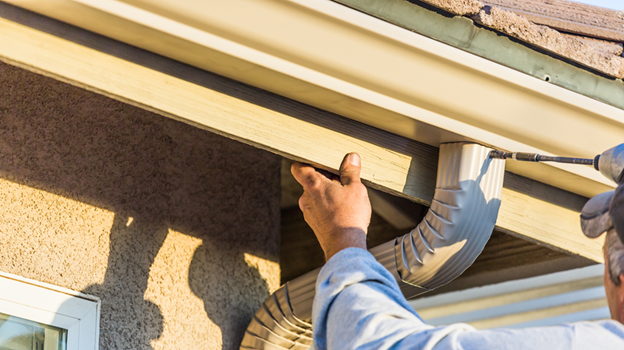
Gutters are a simple system with a not-so-simple job: move water away fast, no matter what the sky throws at your roof. The best setup depends on your weather. From cloudbursts to blizzards to hurricane-force gusts, here are seven climate-specific tips to dial in sizing, pitch, materials, and readiness so your system performs year-round.
1) Heavy-Rain Regions: Go Bigger and Shorter
If your area sees frequent downpours or tropical rains, prioritize capacity and outlet count. Step up from 5″ K-style to 6″ where feasible, and consider oversized 3″x4″ downspouts to prevent bottlenecks. Split long runs with center outlets or opposing downspouts so water travels a shorter path. Maintain a steady slope of 1/16″-1/8″ per foot; enough to drain quickly without looking crooked. Add leaf screens that shed high volumes without matting (perforated metal or micro-mesh rated for heavy flow).
2) Snow & Ice Climates: Prevent Ice Dams Before They Start
In freeze zones, gutter performance is as much about roof edge design as channel size. Ensure a continuous drip edge or gutter apron so meltwater can’t sneak behind the fascia. Use robust hidden hangers rated for snow load and tighten spacing to 16-18 inches in vulnerable spans. Where ice dams are common, combine adequate attic insulation and ventilation with heat cable along the first course of shingles and inside outlets (on a thermostat). Keep pitch consistent; too steep can quick-freeze meltwater at outlets, while flat runs allow refreezing slush to block flow.
3) Desert & Monsoon Areas: Plan for Flash Flood Behavior
Arid regions often swing from dust to deluge. Dust forms a fine silt layer that turns to concrete in downspouts. Opt for smooth, larger-diameter downspouts, long sweep elbows (not tight bends), and cleanout access near ground level. Strengthen attachment at corners that take the brunt of monsoon winds. Add downspout extensions or buried drains to move sudden surges 6-10 feet from the foundation. Guards should resist wind-blown debris; avoid foam fills that can bake and crumble in extreme heat.
4) Coastal & Hurricane Zones: Wind, Salt, and Uplift
Coastal air eats metal, and storms yank at anything not anchored. Choose corrosion-resistant materials (thick aluminum with marine-grade fasteners or coated steel; copper in select applications if compatible with roofing). Use stand-off ladder-safe brackets plus hurricane clips or additional fasteners at corners, end caps, and long spans to mitigate uplift. Reduce sail area by choosing low-profile guards that lock under the shingle edge and fasten to the front lip. Ensure downspouts discharge where surge or king tides won’t backflow toward the structure.
5) Forested Temperate Climates: Debris Management Is the System
In tree-dense neighborhoods, the limiting factor is not rainfall; it’s leaves, seeds, and needles. Micro-mesh or fine-perforation guards minimize clogging, but match the mesh to your tree species (needles need finer screens). Design for serviceability: hinged downspout cleanouts, accessible corners, and removable miter covers. Increase the hanger count because debris adds surprising weight when wet. Keep pitch on the higher end of the acceptable range so smaller obstructions don’t cause standing water. Schedule seasonal inspections, especially after leaf drop and spring pollen.
6) Hail, Wind, and Severe-Storm Corridors: Armor Up the Edges
Where hail and straight-line winds are routine, durability matters. Specify heavier gauge gutters (e.g., .032 aluminum or better) and impact-resistant guards that won’t cave in or oil-can. Use riveted miters and mechanically fastened end caps with high-grade sealant. On long eaves exposed to crosswinds, add intermediate straps or extra hangers to prevent flutter. Downspout terminations should be secured: strap the last section to the wall and choose elbows that won’t crumple under wind-blown debris.
7) Mixed or “Four-Season” Climates: Build a Balanced Spec
If you see everything (thaw, storm, drought, and leaf drop), balance capacity, serviceability, and resilience. Standard 6″ K-style gutters with 3″x4″ downspouts handle most events without looking oversized. Use a consistent 1/16″-1/8″ per foot pitch, tighten hanger spacing under valleys, and reinforce high-flow corners with splash guards. Pick guards that block small debris but can be lifted for quick maintenance. Add flexible downspout extensions you can reposition seasonally (further out during wet months, tucked during freeze periods).
Universal Must-Haves (Every Climate)
- Accurate pitch: Verify with a level, don’t eyeball. Flat spots become algae farms; back-pitch becomes fascia rot.
- Multiple outlets: Long runs need split drainage; valleys need nearby downspouts.
- Compatible materials: Avoid galvanic corrosion; match metals and use exterior-rated fasteners.
- Test and document: Hose-test every run, photograph miters and outlets, and log maintenance dates for warranty and insurance support.
Climate isn’t a footnote; it’s the blueprint. Whether you focus on capacity for cloudbursts, structure for snow load, or corrosion resistance for salt spray, a tailored spec prevents leaks, sagging, and surprise failures when conditions spike. If you’re planning gutter installation for home projects in a demanding region, translate your forecast into hardware: bigger channels where it pours, closer hangers where it snows, tougher guards where it hails, and smarter outlets everywhere. Build for the worst day, and every average day will take care of itself.
