

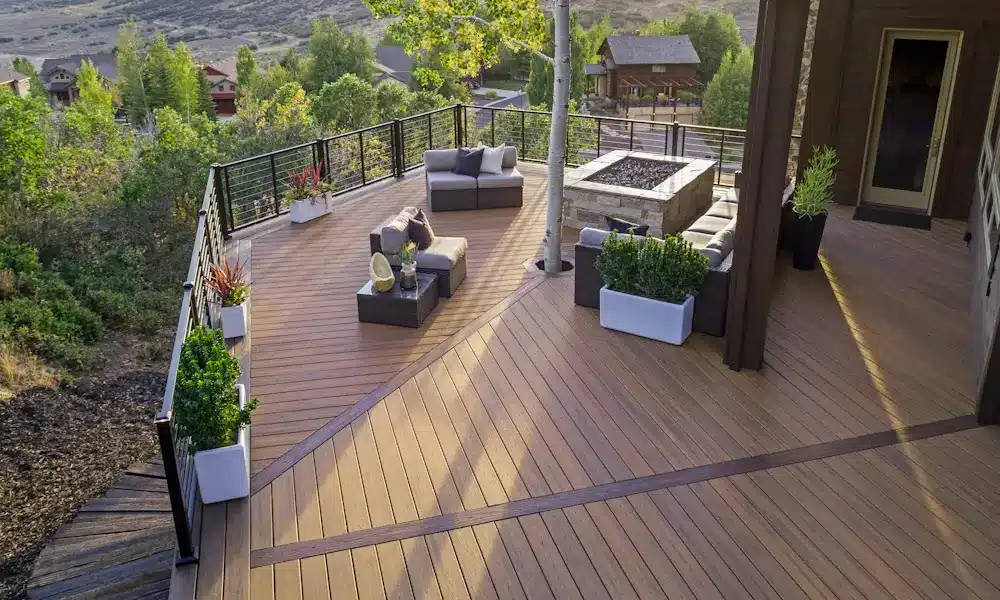
A well-built composite decking surface delivers long-term performance in modern outdoor spaces. Homeowners choose it for durability, colour stability, and minimal upkeep. Unlike traditional timber, composite boards resist many of the problems that shorten deck lifespan. Rot, insect damage, and frequent sealing rarely become concerns.
Most composite decking systems last between 25 and 30 years, with many premium products extending beyond that range when installed correctly. The lifespan depends on the quality of boards, structural framing, climate exposure, and routine care.
Understanding these elements helps homeowners judge the real durability of a composite deck.
Typical Lifespan of Composite Decking
Modern composite deck boards combine recycled wood fibres with durable polymers. Manufacturers compress this mixture under heat and pressure to form dense boards that resist moisture and wear.
Quality products deliver a service life of roughly 25 to 30 years. Premium capped composite boards often reach 35 years or more under favourable conditions.
Lower-grade composite boards may last closer to 15 to 20 years, especially if the outer layer lacks a proper protective coating.
Most manufacturers offer product warranties from 20 to 30 years. These warranties often cover fading, staining, and structural defects. A long warranty often signals strong material performance.
The structure beneath the decking also matters. A poorly built frame can shorten the useful life of even the strongest boards.
Composition and Strength of Composite Deck Boards
Composite boards rely on a layered structure. The interior core contains wood fibre and plastic resin. This combination creates strength while maintaining flexibility.
Many modern boards include a protective outer shell. This shell covers the board on three or four sides. It protects the core from water absorption, stains, and ultraviolet exposure.
This outer layer improves colour retention. It also reduces surface scratches and mould growth.
Older composite decking lacked this protective cap. Those earlier boards absorbed moisture more easily and faded faster. Modern capped composites solve these issues through improved manufacturing methods.
A strong outer layer remains one of the key factors behind long composite deck life. Independent testing and material insights are often discussed by organisations, which provides guidance on decking materials and performance standards.
Installation Quality and Structural Support
A long-lasting deck begins with precise installation. Even the best composite boards fail when installed poorly.
Builders must space deck joists correctly. Composite boards require tighter spacing than natural timber. Typical joist spacing ranges from 30 to 40 centimetres, depending on board thickness.
Wide spacing leads to board flexing and structural stress.
Fastening systems also affect durability. Hidden clip systems secure boards without penetrating the surface. This method protects the outer layer from moisture intrusion.
Proper deck drainage plays a role as well. Water must flow away from the deck surface and framing. Standing water increases wear over time.
When builders follow manufacturer guidelines, composite decking performs far longer.
Weather Resistance and Climate Impact
Composite decking performs well in harsh climates. The material resists rain, snow, and temperature shifts better than untreated timber.
In colder climates, freeze-thaw cycles can damage wood decks. Composite boards handle these cycles with less expansion and contraction.
In warmer regions, strong sun exposure may cause surface fading over many years. High-quality capped boards include UV-resistant coatings that slow colour loss.
Coastal environments bring salt air and high humidity. Composite boards perform strongly in these conditions because they resist rot and corrosion.
While climate influences wear, modern composite decking maintains its structure and appearance for decades.
Maintenance and Care Over Time
Composite decking requires minimal care. However, simple maintenance helps extend its lifespan.
Regular cleaning prevents dirt buildup and organic growth. Homeowners should wash the deck with mild soap and water several times per year.
A soft brush removes surface debris between boards. This keeps drainage channels open.
Furniture pads prevent scratches from chairs and tables. Planters should sit on protective risers rather than directly on the deck surface.
Unlike timber, composite boards do not require staining, sealing, or sanding. This low-maintenance approach contributes to the long service life of composite decking.
Routine cleaning keeps the surface looking new.
Signs of Age in Composite Decking
Even durable materials show wear over time. Composite decking ages gradually rather than failing suddenly.
Common signs of age include:
- Slight surface fading after long sun exposure
- Minor surface scratches from furniture movement
- Small stains from leaves or organic debris
These issues rarely affect structural strength. Most cosmetic marks clean easily or blend into the surface texture.
Unlike wood decks, composite boards rarely crack, splinter, or rot.
This gradual ageing process keeps the deck functional and safe throughout its lifespan.
Comparison with Traditional Timber Decking
Composite decking lasts far longer than many traditional timber decks.
Pressure-treated wood decks usually last 10 to 15 years before major repairs appear. Moisture exposure leads to rot, warping, and insect damage.
Hardwood decking performs better. Dense woods such as ipe or teak may last 20 to 25 years with proper care. However, these materials demand frequent sealing and maintenance.
Composite boards remove much of this upkeep while maintaining a long service life.
Homeowners often choose composite decking because it balances durability, stability, and reduced maintenance effort.
Long-Term Value of Composite Decking
The lifespan of composite decking delivers strong long-term value. While the initial installation cost may exceed basic timber decks, the extended durability offsets that investment.
Reduced maintenance, fewer repairs, and a stable appearance keep the deck attractive for decades.
Homeowners also benefit from improved safety. Composite boards resist splintering and maintain a consistent surface texture.
For gardens, patios, and outdoor entertaining areas, composite decking provides a dependable surface that continues performing year after year.
With proper installation and simple care, a composite deck can remain strong, clean, and visually appealing for 25 to 35 years or more.
